
Urolithin A for Muscle: Does It Work? What the Evidence Shows
You may have seen urolithin A talked up as the supplement that keeps muscle young by cleaning out worn-out cell parts. It sounds impressive. So does it work?
This is not a pitch for a product. It’s a look at what the human studies show, what they leave out, and who might get something from it.
If you’re weighing whether to buy, our honest guide to choosing a urolithin A supplement covers the form, dose and third-party testing that actually matter.
The one-sentence summary
Urolithin A shows real promise in early human trials for keeping muscle endurance and mitochondrial health as we age, but the evidence is still thin, mostly short and small, and much of it was funded by the company that makes the main supplement.
What is urolithin A, and where does it come from?
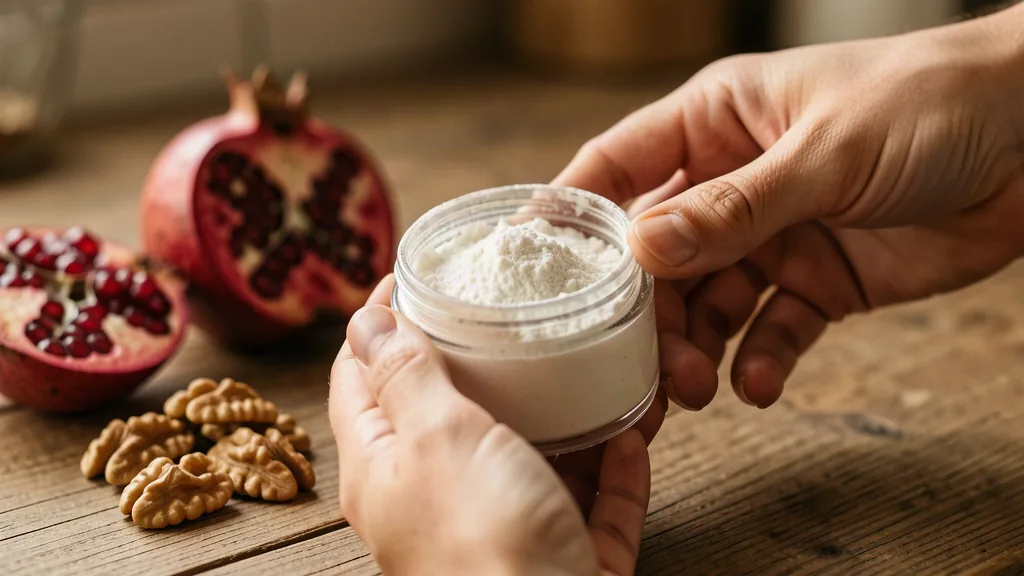
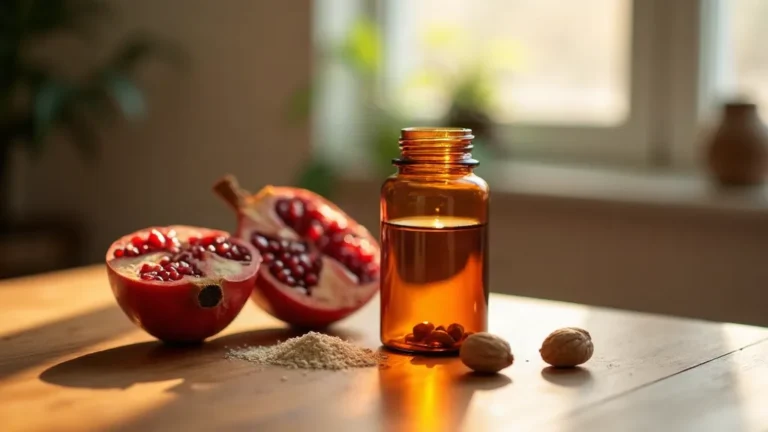
Urolithin A isn’t something you eat directly. Your gut bacteria make it. When you eat foods rich in a group of plant compounds called ellagitannins, pomegranates, walnuts, strawberries, your gut microbiome converts some of them into urolithin A.
Here’s the catch: not everyone’s gut bacteria do this well. Some people produce plenty of urolithin A from food, others very little. That’s part of why a supplement exists, it gives you the finished compound directly, skipping the gut-conversion step that some people are bad at.
The idea: cleaning out tired mitochondria
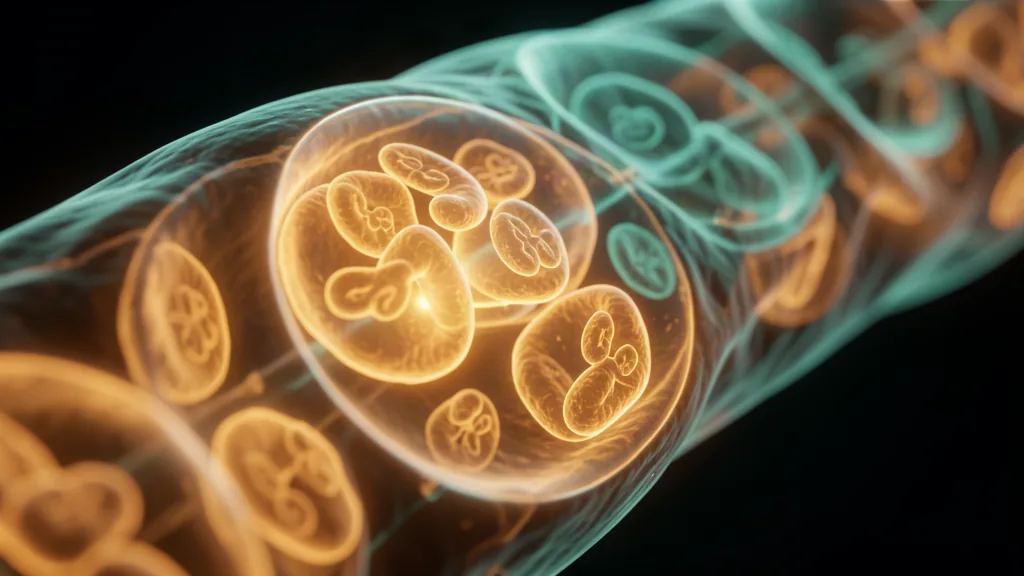
To understand urolithin A you need one concept: mitophagy. It’s the body’s system for finding and recycling damaged mitochondria, the tiny power plants inside your cells.
As you age, that recycling slows down. Worn-out mitochondria pile up and produce less energy and more cellular clutter. The theory behind urolithin A is that it switches mitophagy back on, so your cells clear out the old mitochondria and build healthier ones. Better mitochondrial function, the logic goes, means muscles that stay stronger and tire less easily.
That’s the biology. The question is whether it shows up in real people.
What the human trials found
Let’s start with the study that gets most of the attention.
In 2022, a randomized placebo-controlled trial in Cell Reports Medicine gave middle-aged adults urolithin A for four months. The researchers reported an improvement in muscle strength of around 12%, plus gains in aerobic endurance and the six-minute walk test. Crucially, though, the study’s main endpoint, peak power output, did not show a significant improvement. The authors are employees of Amazentis, the company that makes the branded urolithin A product tested.
The data show significant improvements in muscle strength (~12%) with intake of Urolithin A.
Singh et al., Cell Reports Medicine, 2022
Around the same time, a trial in JAMA Network Open looked at older adults and found the supplement was safe and well tolerated. Improvements in the six-minute walk and muscle ATP production didn’t reach significance versus placebo, but longer-term use did appear to help muscle endurance and blood biomarkers of mitochondrial health. Again, several authors worked for the supplement maker.
A 2024 study took the question to athletes, giving resistance-trained men one gram of urolithin A daily for eight weeks. Isometric strength and reps-to-failure improved more than placebo, and inflammation markers dropped. But the more classic strength measures, bench-press and squat one-rep-max, improved without reaching statistical significance. It’s a small study, twenty men.
The honest part: what a 2026 analysis found
Here’s where it’s worth slowing down, because the picture gets more sobering when you step back.
A 2026 systematic review and meta-analysis in Frontiers in Nutrition pulled together all five randomized trials it could find, 236 people in total. The only outcome it could combine across studies was the six-minute walk test, and even that showed a benefit that didn’t reach statistical significance, with the certainty of the evidence rated low.
The currently available randomized human evidence is limited to five small, short-term trials in clinically heterogeneous populations.
Dao et al., Frontiers in Nutrition, 2026
The authors were blunt that the findings on strength and endurance should be treated as exploratory signals, not proof. That’s the honest state of the science right now.
What this means for you
| Who | What the evidence suggests |
|---|---|
| Older adults | Most promising target. Some signal for keeping muscle endurance and mitochondrial health. |
| Middle-aged, active | Possible benefit on strength and aerobic endurance, but effects were modest and not always significant. |
| Athletes | Endurance and isometric strength improved in one small study; classic strength didn’t. Don’t expect it to act like creatine. |
| Anyone expecting visible muscle growth | This isn’t that. Urolithin A is not a muscle-builder in the gym sense. |
If you’re thinking about it, set expectations right: this is a slow, mitochondrial-health play, not a quick strength or physique boost. Most trials ran eight weeks to four months, and the gains were modest. And because much of the positive research traces back to one manufacturer, treat the marketing with healthy skepticism and read the independent 2026 review before you spend.
This article is for information, not medical advice. Talk to a clinician before starting any supplement, especially if you take medication or have a health condition.
Urolithin A is one piece of our NAD+ coverage. Our NAD+ hub explains whether NAD+ really declines with age and how NMN and NR compare. Senolytics are the other route in this space, and our fisetin evidence review covers how thin that evidence is.
FAQ
Does urolithin A build muscle?
Not in the bodybuilding sense. The research points to it supporting muscle endurance and mitochondrial health, especially in older adults, not visible muscle growth. If you want to add lean mass, creatine and resistance training are the evidence-backed route, and urolithin A is a different tool for a different job.
Is urolithin A safe?
In the trials published so far, urolithin A has been well tolerated at doses of 500 mg to 1,000 mg daily over periods of eight weeks to four months. There’s little long-term data, so no one can promise safety over years of daily use. It hasn’t been well studied in pregnancy or people with serious illness.
How long does urolithin A take to work?
The trials ran eight weeks to four months, and effects were gradual rather than dramatic. If there’s a benefit, you’re unlikely to feel it in the first couple of weeks. Don’t expect a fast, obvious change.
How much urolithin A should you take?
Studies have used 500 mg to 1,000 mg per day of the branded form. Check the label and start at the lower end. There’s no established dose from research that clearly beats another.
Can you get urolithin A from food?
Your gut can make it from ellagitannins in pomegranates, walnuts, and some berries, but conversion depends heavily on your gut bacteria, and some people produce little to none. A supplement gives the finished compound directly, which is why people who don’t convert well might consider it.
References & sources (4)
References & sources
- Singh A, et al. Urolithin A improves muscle strength, exercise performance, and biomarkers of mitochondrial health in a randomized trial in middle-aged adults. Cell Reports Medicine. 2022. PMID 35584623
- Liu S, et al. Effect of Urolithin A Supplementation on Muscle Endurance and Mitochondrial Health in Older Adults: A Randomized Clinical Trial. JAMA Network Open. 2022. PMID 35050355
- Zhao H, et al. Assessment of Urolithin A effects on muscle endurance, strength, inflammation, oxidative stress, and protein metabolism in male athletes with resistance training: an 8-week randomized, double-blind, placebo-controlled study. J Int Soc Sports Nutr. 2024. PMID 39487653
- Dao T, et al. Effects of Urolithin A supplementation on muscle health outcomes in humans from randomized controlled trials. Frontiers in Nutrition. 2026. PMID 42559151


3 Comments